
The following certifications and ongoing learning experiences have all played an important role in shaping my approach to teaching. Together, they have strengthened my ability to support students academically, socially, and emotionally while creating a classroom environment that is inclusive, respectful, and responsive to students diverse needs. From understanding reconciliation and Indigenous perspectives to supporting student well-being and basic needs, each experience has helped me grow as an educator and better prepare me to meet students where they are at.
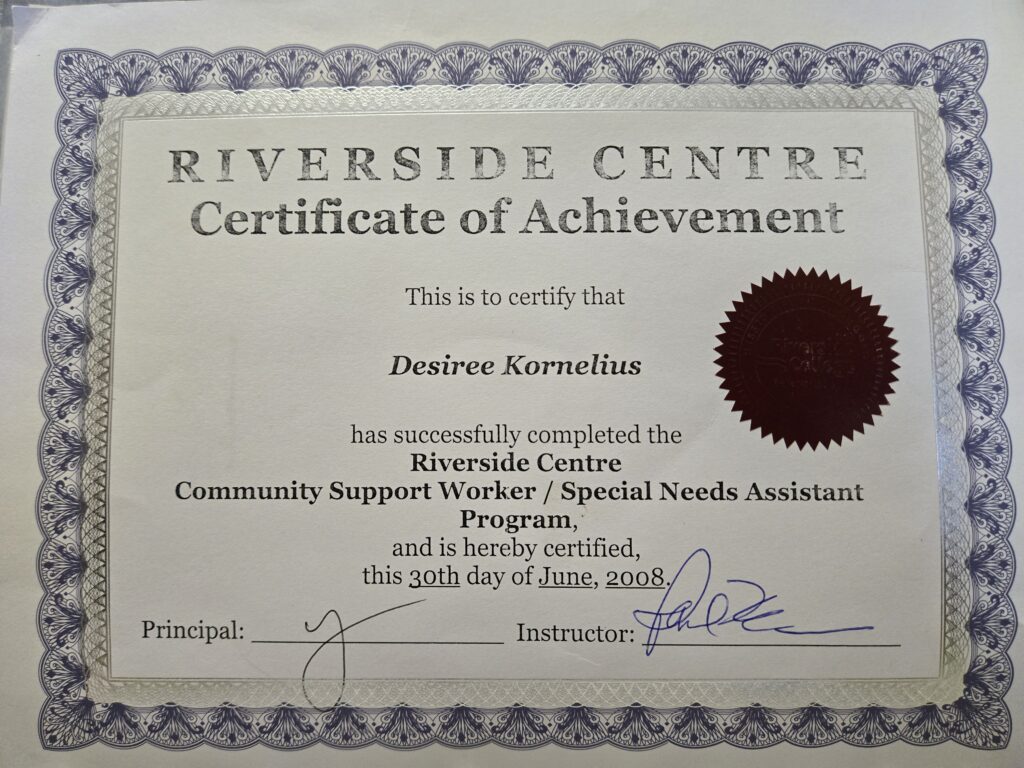
Completing my CSW/EA certification was an important step in developing the skills needed to support students with diverse and complex needs in a respectful and inclusive way. Through this training, I learned how to provide care that prioritizes dignity, safety, and individual strengths. This has shaped how I approach student support in the classroom, reminding me to always see the whole child and respond with empathy and patience. As an educator, this certification helps me create a more inclusive learning environment where all students feel valued, supported, and capable of success, regardless of their unique challenges or abilities.
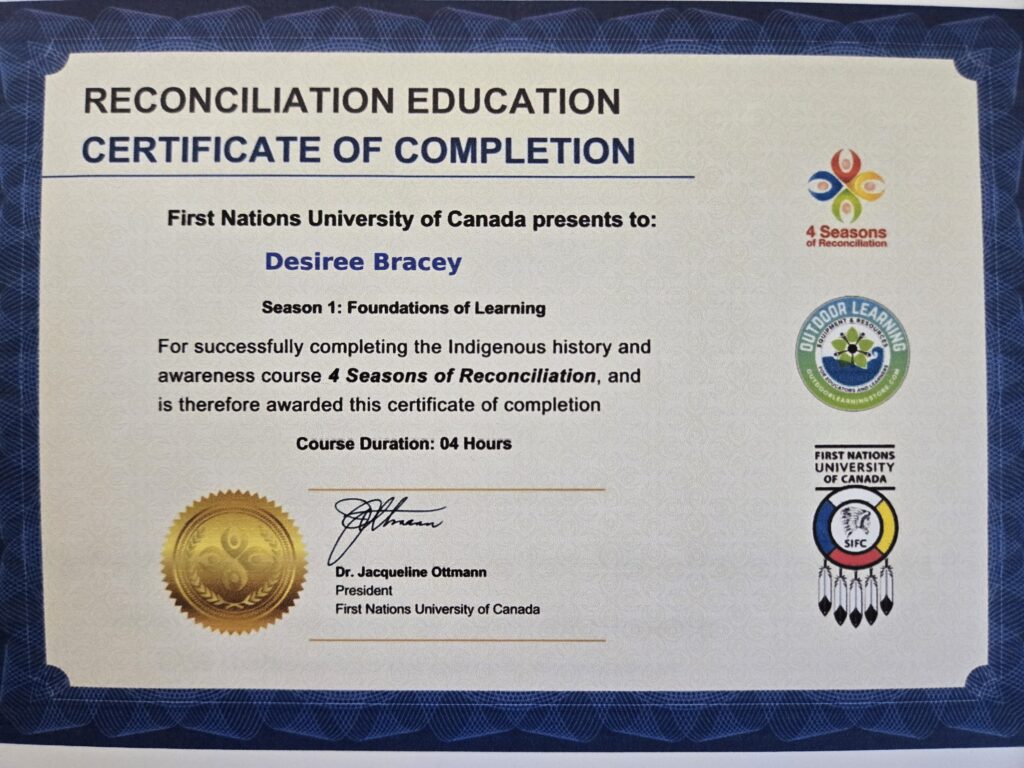
The Reconciliation Education certificate deepened my understanding of the importance of reconciliation in education and my responsibility as a teacher within that process. It helped me reflect on the historical and ongoing impacts of colonization, particularly in relation to Indigenous communities, and how education can play a role in both harm and healing. This learning has influenced how I think about the curriculum, relationships, and classroom discussions. As an educator, I feel more prepared to approach topics with care, respect, and honesty, and to create a classroom environment that acknowledges diverse perspectives while fostering understanding, respect, and meaningful dialogue.
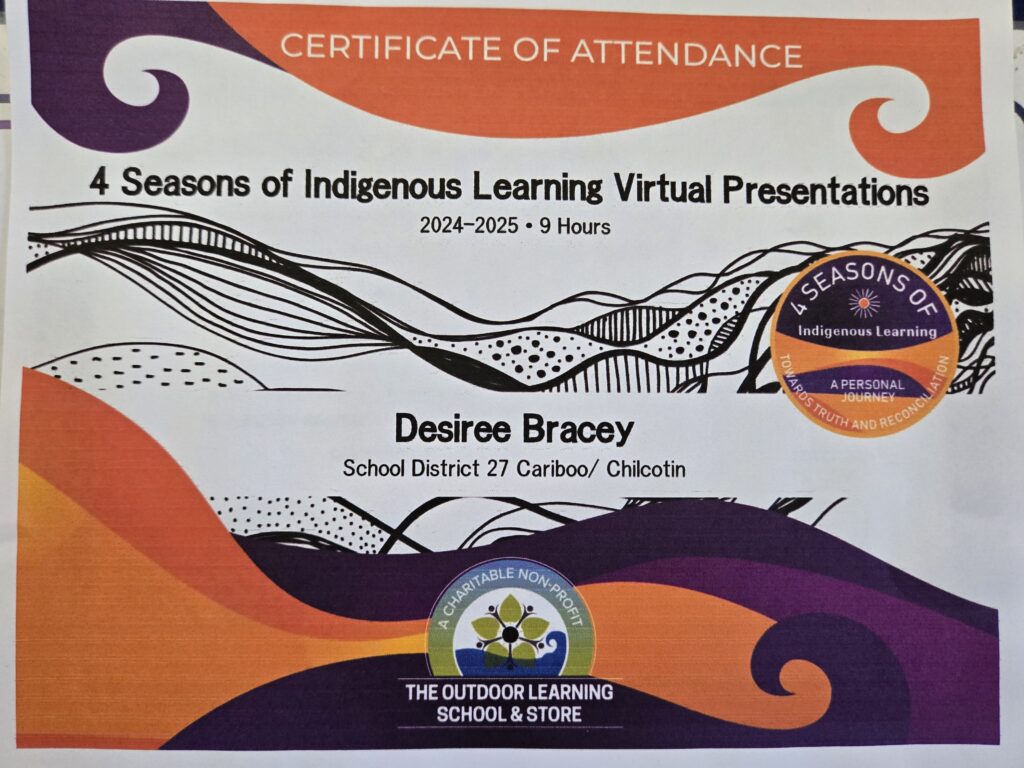
Through School District 27’s Indigenous Learning series, I have gained practical insights into how I can meaningfully connect curriculum to Indigenous perspectives and ways of knowing. The Four Seasons framework emphasizes relationships, respect, and learning as a continuous process, which has influenced how I think about teaching and learning. This experience has helped me move beyond surface-level inclusion, toward more authentically, and respectfully integrating Indigenous content. As an educator, it supports me in creating learning opportunities that are more holistic, culturally responsive, and grounded in place, while encouraging students to develop a deeper understanding of Indigenous knowledge and perspectives.
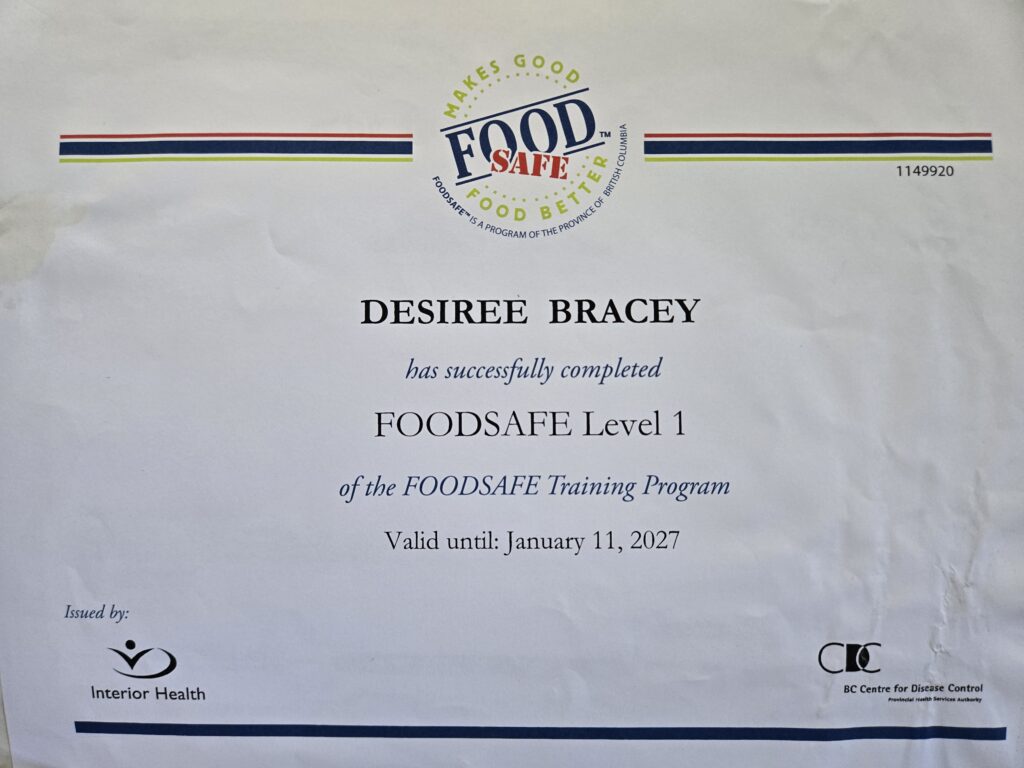
Earning my FoodSafe certification has allowed me to safely support school-based food programs like breakfast club and lunch initiatives, which are essential for student well-being and readiness to learn. This certification ensures that I understand proper food handling, hygiene, and safety practices, all of which are important when working in a school environment. As an educator, it also highlights the importance of meeting students’ basic needs as part of supporting their overall success. Being able to contribute to these programs allows me to support students beyond academics, helping to create a caring and inclusive school community where students feel supported and ready to engage in learning. Volunteering for these programs also gives me a chance to connect with students outside of the classroom environment in a meaningful way.
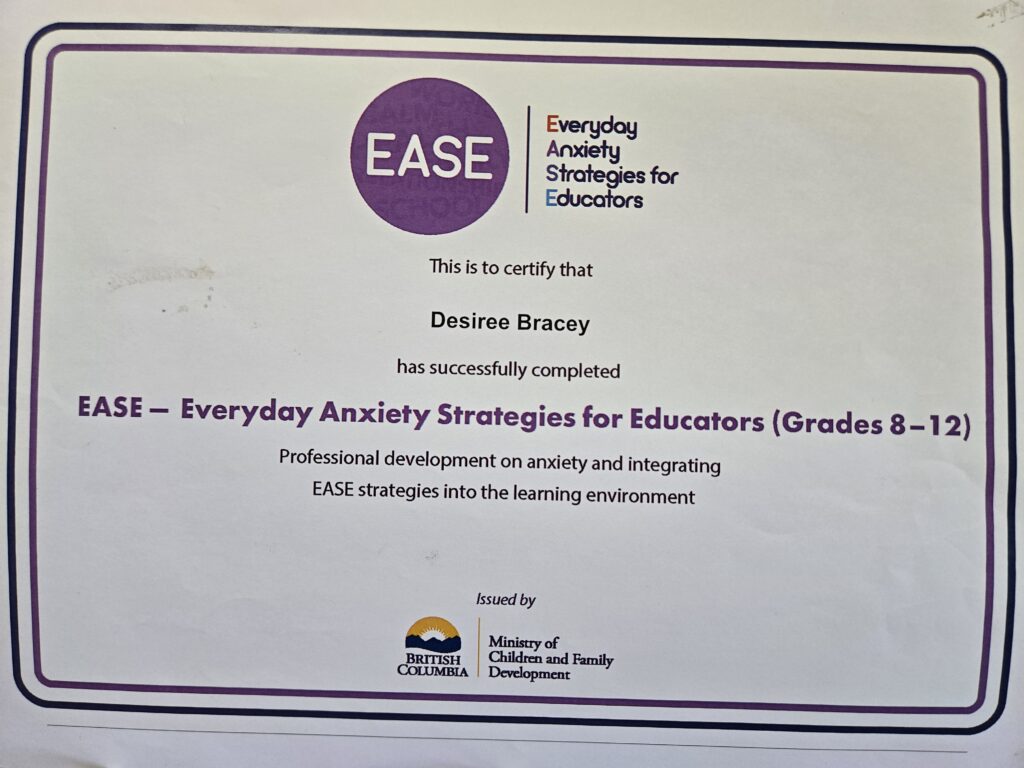
Completing the EASE (Everyday Anxiety Strategies for Educators) certification has strengthened my understanding of how anxiety and stress can impact students’ learning and behaviour. This training provides practical, classroom-friendly strategies to support students in managing their emotions and building resilience. It has helped me recognize the importance of creating predictable, supportive environments where students feel safe and understood. As an educator, this learning allows me to respond more effectively to students experiencing anxiety, using proactive approaches that promote well-being, confidence, and engagement, while also helping students develop lifelong coping skills.